
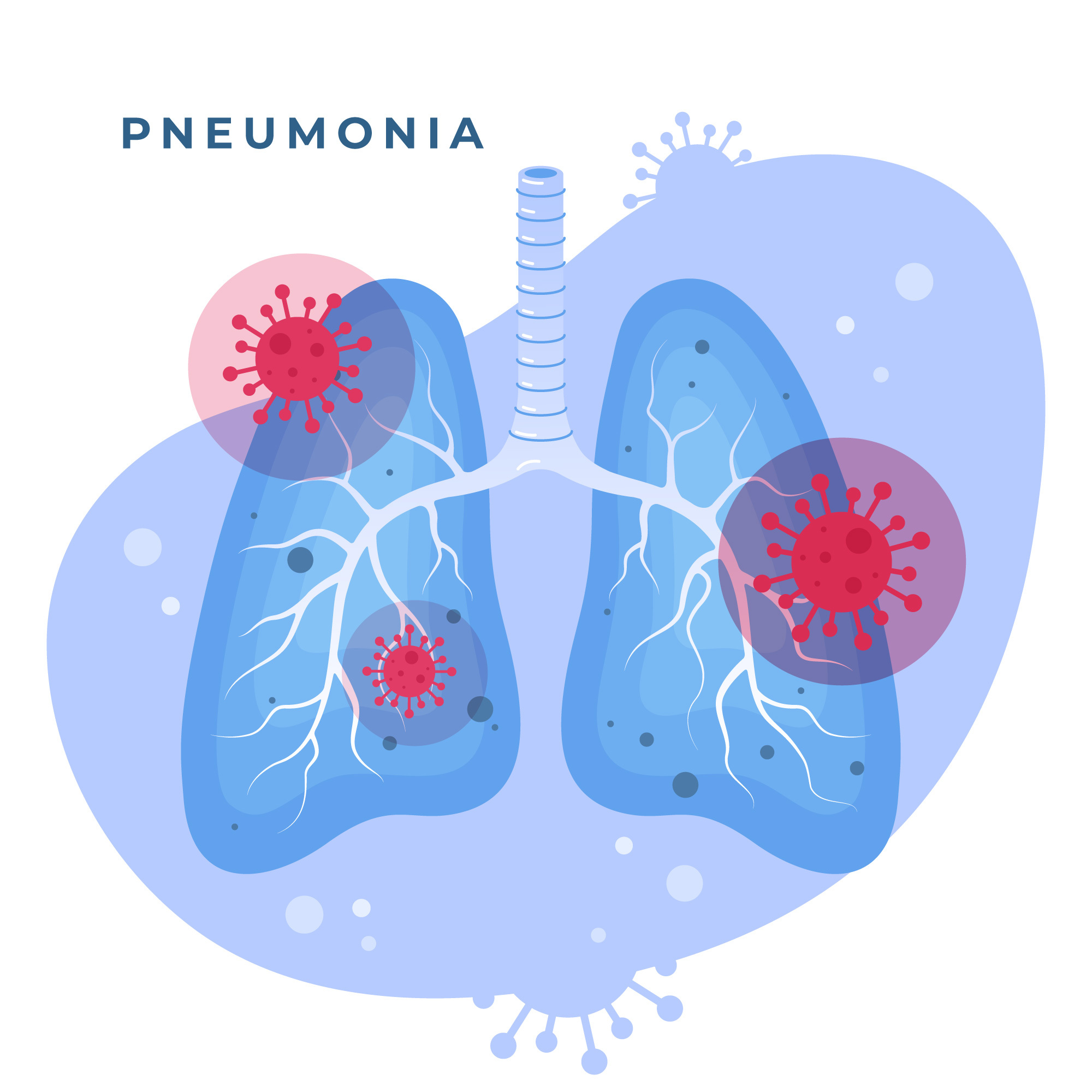
When Your Lungs Struggle to Keep You Breathing
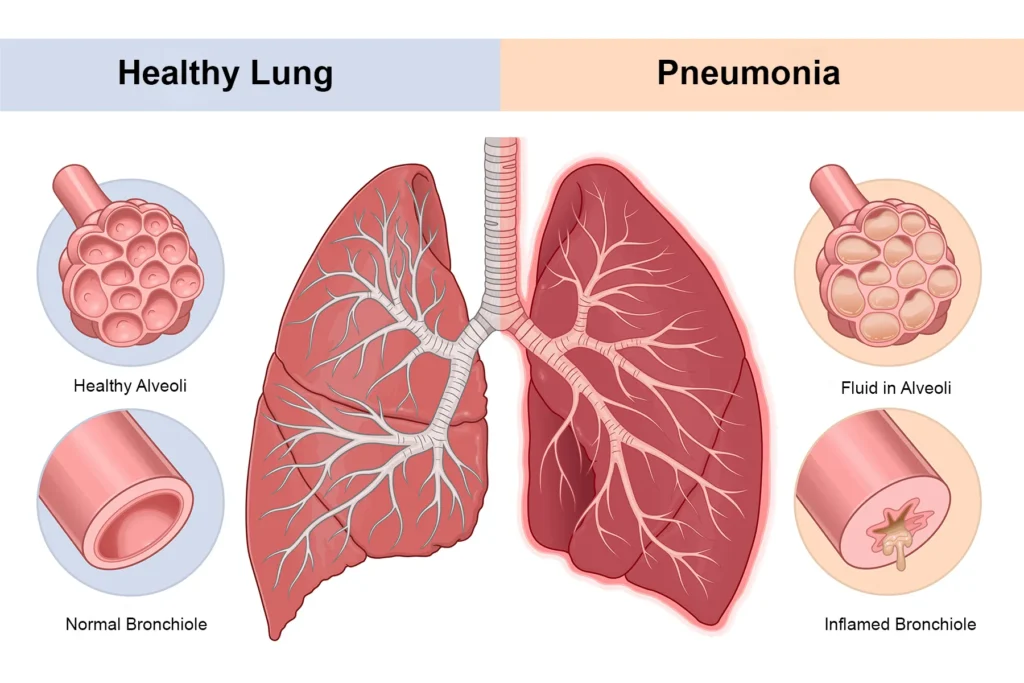
Pneumonia is an infection that affects the lungs, causing inflammation in the air sacs (alveoli). These air sacs may fill with fluid or mucus, making breathing difficult and reducing oxygen supply to the body. Pneumonia can range from mild to severe and is commonly seen during seasonal changes, viral infections, or when immunity is low. It affects children, adults, and elderly people, but the severity is higher in individuals with weak respiratory or immune systems.
Hidden Factors That Trigger Lung Infection
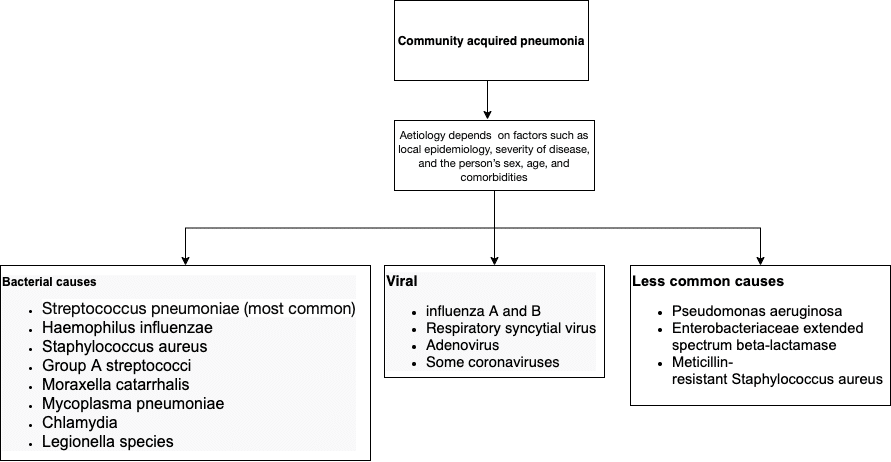
Pneumonia is usually caused by viruses, bacteria, or fungi entering the lungs. It often occurs after a cold, flu, or respiratory infection. Common contributing factors include exposure to pollution, smoking, weak immunity, seasonal climate changes, dehydration, sleeping under direct AC/fan air, and not treating cough or cold on time. Individuals who are physically weak, stressed, or nutritionally deficient are more prone to pneumonia.
How Pneumonia Impacts the Respiratory System
Pneumonia affects the lungs and the entire respiratory system. The air sacs become inflamed and filled with fluid, reducing oxygen exchange. This makes breathing heavy and fast. The infection can also affect chest muscles and the throat, leading to coughing, chest pain, and fatigue.
What Happens When Pneumonia Is Left Uncontrolled
If not treated properly, pneumonia can cause persistent fever, difficulty breathing, severe cough, chest pain, fatigue, and dehydration. In serious cases, oxygen levels in the blood may decrease, requiring medical attention. Recurring or untreated pneumonia can weaken the lungs long-term and may become dangerous for infants, elderly individuals, and those with weak immunity.
The Rising Burden of Pneumonia Worldwide
| Viral infection after a cold | Severity Level | Common Cause | Recovery Pattern |
| Children | Moderate to High | Viral infection after cold | Improves with proper care |
| Adults | Moderate | Pollution, smoking, weakened immunity | Recovers in 1–3 weeks |
| Elderly / Low Immunity | High risk | Bacterial infection & weak lung function | Slow recovery, needs careful monitoring |
Recent health trends show pneumonia cases increase during winter and rainy seasons, especially in polluted urban areas where air quality is poor.
Leave a Reply